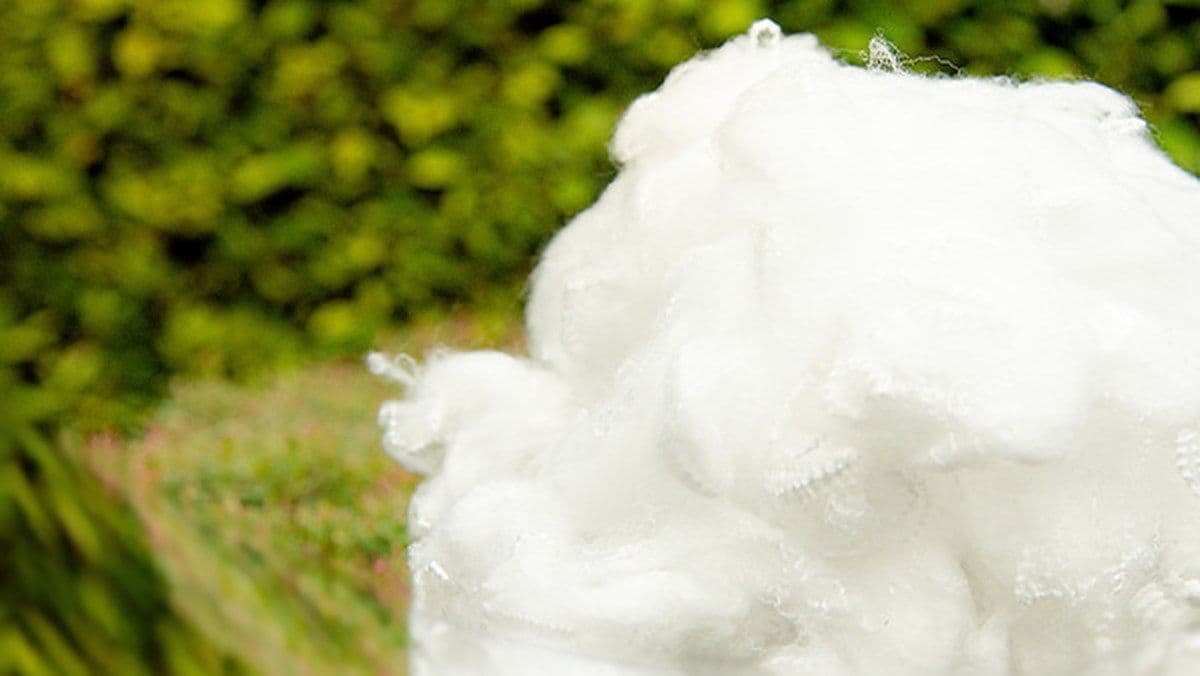
Fibre is the fine, crimped filling material used inside pillows, duvets, poufs and decorative cushions in home textiles. It comes in two main groups: natural (cotton, wool, down) and synthetic (polyester), with polyester fibre being the most widely used type in home textile filling. The fibre type used directly determines a filling's softness, recovery and lifespan.
Natural Fibre vs. Synthetic Fibre
Natural fibres (cotton, wool, down) offer strong breathability and warmth but tend to hold moisture and need regular airing. Synthetic fibre, mainly polyester, does not absorb moisture, recovers its shape quickly, costs less, and withstands machine washing better than most natural fibres. It makes up the bulk of production volume for manufacturers balancing price and performance.
Types of Polyester Fibre
| Fibre Type | Structure | Used In |
|---|---|---|
| Carded Fibre | Straight, parallel-laid fibres, denser and firmer filling | Economy pillows, poufs, general filling |
| Ball Fibre | Fibre processed into small balls or clusters | Shape-retaining poufs, toys, some pillow fillings |
| Siliconized Fibre | Fibre surface coated with a thin silicone layer, slippery and springy | Mid-to-premium pillows and duvets |
| Microgel Fibre | A finer-denier, softer-handling version of siliconized fibre | Premium, soft-handle pillows and duvets |
| Hollow Conjugated Fibre | Fibre with a hollow core, giving bulk and lightness | Duvets, winter filling, high-loft products |
| Flame-Retardant (FR) Fibre | Manufactured with additives that slow ignition | Hotels, dormitories and public buildings under fire codes |
See the full technical range on our Fibre page.
What Is Silicone Fibre?
Siliconizing is a manufacturing step: a thin layer of silicone oil is applied to the surface of polyester fibre. This coating reduces friction between fibres, so instead of matting together, they slide past one another. The result is a filling that springs back to shape faster after compression and feels softer to the touch.
What Are Denier and Cut Length?
Denier measures fibre fineness, the weight in grams of 9,000 meters of fibre. Low denier (roughly 1.2-3) gives a thin, soft fibre; high denier (6-15) gives a thicker, bulkier, more durable fibre. Cut length is the fibre's length in centimeters: shorter cuts give a softer, more uniform filling, while longer cuts add loft. Both are chosen based on the end product, pillow, duvet or pouf.
Is Fibre or Silicone Fibre Better?
This question comes from a small mix-up: silicone fibre is not an alternative to fibre; it is a sub-type of fibre. The real comparison is between untreated (raw) fibre and siliconized fibre.
| Criteria | Untreated (Carded/Ball) Fibre | Siliconized Fibre |
|---|---|---|
| Softness | Moderate | High |
| Recovery speed | Slower | Faster |
| Matting risk | Higher | Lower |
| Cost | Lower | Moderate-to-higher |
| Best for | Economy products | Mid-to-premium products |
The same logic applies to "ball fibre or silicone": ball fibre is fibre processed into clusters for shape and loft, and it can also be siliconized. A finished filling is often "siliconized ball fibre," combining both steps.
What Is Nano Fibre?
Nano fibre refers to ultra-fine fibre with a diameter reduced to the sub-micron (nanometer) scale, typically produced by electrospinning. Its high surface area makes it useful in filtration and technical textiles. The polyester fibre family used for pillow, duvet and pouf filling, carded, ball, siliconized, microgel, hollow conjugated and FR, is a different production technology and scale from nano fibre; our production line focuses on this classic polyester family.
Is Silicone Fibre Healthy?
Siliconizing is simply a thin oil coating applied to the fibre surface, used widely in home textiles for decades. If you have skin sensitivities, allergies or respiratory concerns, consulting a healthcare professional is the safest way to choose the right product for you.
How to Judge Fibre Quality
- Recovery test: Squeeze the fibre and release it; good siliconized fibre springs back to its original volume within seconds.
- Uniformity: Quality fibre has consistent thickness and color throughout, without matted or hardened patches.
- Smell check: Freshly produced fibre should have no chemical or musty odor.
- Weight consistency: The declared fill weight should match the actual filling weight, a reliable long-term quality signal.
For more on the raw fibre used in our pillow, duvet and pouf production, see our Fibre page, or reach out via Custom Manufacturing for specific denier and weight requests.
Frequently Asked Questions
What is silicone fibre?
Silicone fibre is polyester fibre with a thin silicone coating on its surface. The coating reduces friction between fibres and helps the filling recover its shape faster.
Is fibre or silicone fibre better?
Silicone fibre is a sub-type of fibre, not an alternative to it, so the real comparison is between untreated and siliconized fibre. Siliconized fibre is softer and recovers faster; untreated fibre is more economical.
Ball fibre or silicone?
Ball fibre is fibre processed into clusters, and it can also be siliconized; these are different production steps that are often combined rather than alternatives.
What is nano fibre?
Nano fibre is ultra-fine fibre produced by electrospinning, with a diameter at the nanometer scale, typically used in technical textiles and filtration, a different technology from the polyester family used in pillows and duvets.
Is silicone fibre healthy?
Siliconizing is a thin oil coating on the fibre surface and has long been standard in home textiles. If you have skin sensitivities or allergies, consult a specialist when choosing a product.
Choosing the right fibre type shapes the softness, loft and durability of the final product. To work out the right fibre type, denier and fill weight for your brand, contact our production team via Contact.